UV Safety Month: Why Protecting Your Skin Matters More Than You Think
By Mackenzie Yelle
July is recognized as UV Safety Month, making it the perfect time to talk about one of the most important—and often overlooked—aspects of skin health: daily sun protection.
Most people know sunscreen helps prevent sunburns, but UV exposure can also contribute to premature aging, hyperpigmentation, collagen breakdown, and even affect how well your skin heals. Whether you're spending time outdoors this summer or simply running daily errands, protecting your skin from UV damage is essential.
Understanding UV Damage
The sun emits two primary types of ultraviolet rays that affect the skin:
UVA rays penetrate deep into the skin and contribute to:
Fine lines and wrinkles
Collagen breakdown
Uneven skin tone
Premature aging
UVB rays affect the skin's surface and are primarily responsible for:
Sunburns
Visible skin damage
Increased skin cancer risk
What many people don't realize is that UV damage can occur even without a sunburn. Small amounts of daily exposure add up over time and can have lasting effects on skin health and appearance.
UV Exposure and Skin Discoloration
Sun exposure stimulates melanin production, which can worsen:
Dark spots
Post-inflammatory hyperpigmentation (PIH)
Melasma
Uneven skin tone
This is one reason dermatologists often emphasize daily sunscreen use—not just at the beach, but year-round.
Why Healing Skin Needs Extra Protection
Healing skin is especially vulnerable to UV damage.
Whether you're recovering from surgery, a cosmetic procedure, an injury, or a breakout, UV exposure can contribute to:
Increased redness
Darker scars
Prolonged discoloration
Less favorable cosmetic outcomes
New scars are particularly sensitive to sunlight. Without proper protection, they can become more noticeable and take longer to fade.
Simple Ways to Protect Your Skin
Protecting your skin doesn't have to be complicated.
A few simple habits can make a significant difference:
Wear broad-spectrum sunscreen daily
Reapply sunscreen when outdoors
Seek shade during peak sun hours
Wear hats and protective clothing
Give healing skin extra attention and protection
Consistency is key. Daily protection helps support both short-term recovery and long-term skin health.
Supporting Scar Recovery with Skinuva Scar+ SPF
For individuals recovering from surgery, cosmetic procedures, or skin injuries, scar care and sun protection should go hand in hand.
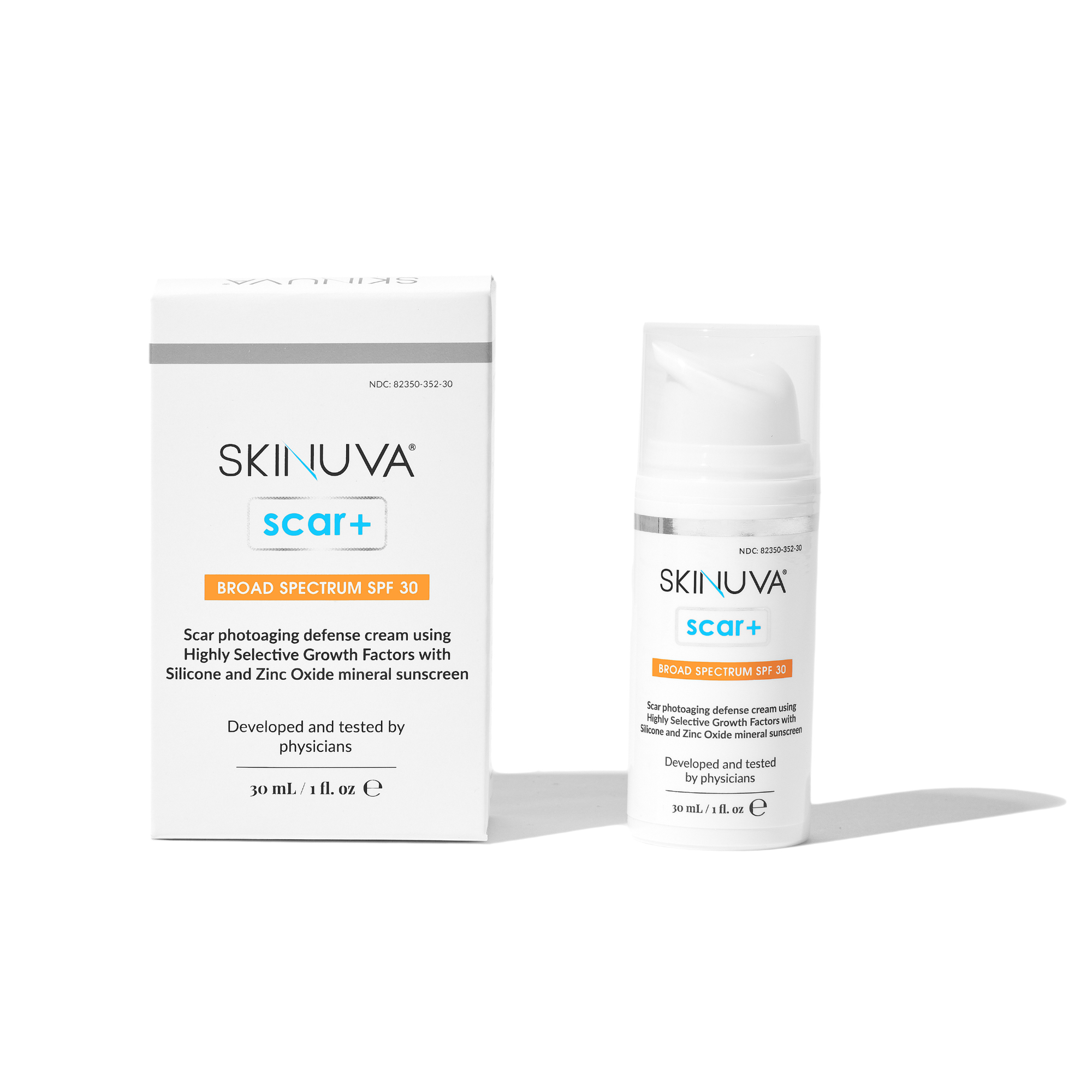
Skinuva Scar+ SPF combines advanced scar care ingredients, including silicone and synthetic growth factors, with broad-spectrum SPF 30 protection. This dual-action approach helps support the appearance of healing skin while protecting scars from UV exposure that can contribute to discoloration and prolonged redness.
By combining scar therapy and sun protection in one product, Skinuva Scar+ SPF makes it easier to support healing skin throughout the recovery process.
The Bottom Line
UV protection is about more than preventing sunburns. Daily sun exposure can affect skin aging, discoloration, collagen health, and even the appearance of healing skin.
As we recognize UV Safety Month this July, it's a great reminder that protecting your skin from the sun is one of the simplest and most effective steps you can take to support healthier-looking skin today and in the future.