How to Prevent Scars Before They Form: A Timeline Guide
By Mackenzie Yelle
Scars don’t simply appear overnight, they develop based on how your skin heals in the days and weeks following an injury, procedure, or even a breakout. While many people focus on treating scars after they’ve already formed, the reality is that the most important window for minimizing scarring happens much earlier: during the healing process itself. Understanding what your skin needs at each stage can make a meaningful difference in how smooth, flat, and even-toned the final result looks.
The First 24–48 Hours: Protecting the Healing Environment
In the earliest stage of healing, your body enters the inflammatory phase. During this time, the skin is working to stop bleeding, prevent infection, and begin rebuilding tissue. The priority here is protection rather than active scar treatment. Keeping the area clean, lightly moisturized, and covered if recommended by your provider helps create the ideal environment for proper healing.
Because the skin barrier is still fragile, it’s important to avoid picking, rubbing, or applying strong skincare products. Disrupting the wound at this stage can interfere with the body’s natural repair process and increase the likelihood of visible scarring later on.
Days 3–14: When Scar Prevention Truly Begins
Once the surface of the skin has fully closed, the body moves into the proliferation phase of healing. This is when collagen production increases rapidly and scar tissue begins to form. What happens during this window plays a major role in determining whether a scar heals smoothly or becomes raised, firm, or noticeable.
Starting targeted scar care at this stage helps support balanced collagen formation. This is why dermatologists often emphasize that early intervention (as soon as the skin is closed) is one of the most effective steps for minimizing long-term scarring.
Weeks 2–6: Preventing Thick or Discolored Scars
As healing progresses, collagen continues to build during the remodeling phase. This is the period when scars may begin to appear red, darker than the surrounding skin, or slightly raised. Without proper care, these changes can become more pronounced and persist over time.
Consistent use of scar therapy during this stage helps maintain hydration, reduce inflammation, and support ongoing collagen remodeling. At the same time, protecting the area from stretching, irritation, or friction can help prevent excess scar formation.
Why Sun Protection Is Critical During Healing
One of the most overlooked factors in scar prevention is sun exposure. Healing skin is extremely sensitive to ultraviolet light, and even brief exposure can trigger pigment changes that cause scars to darken and become more difficult to fade.
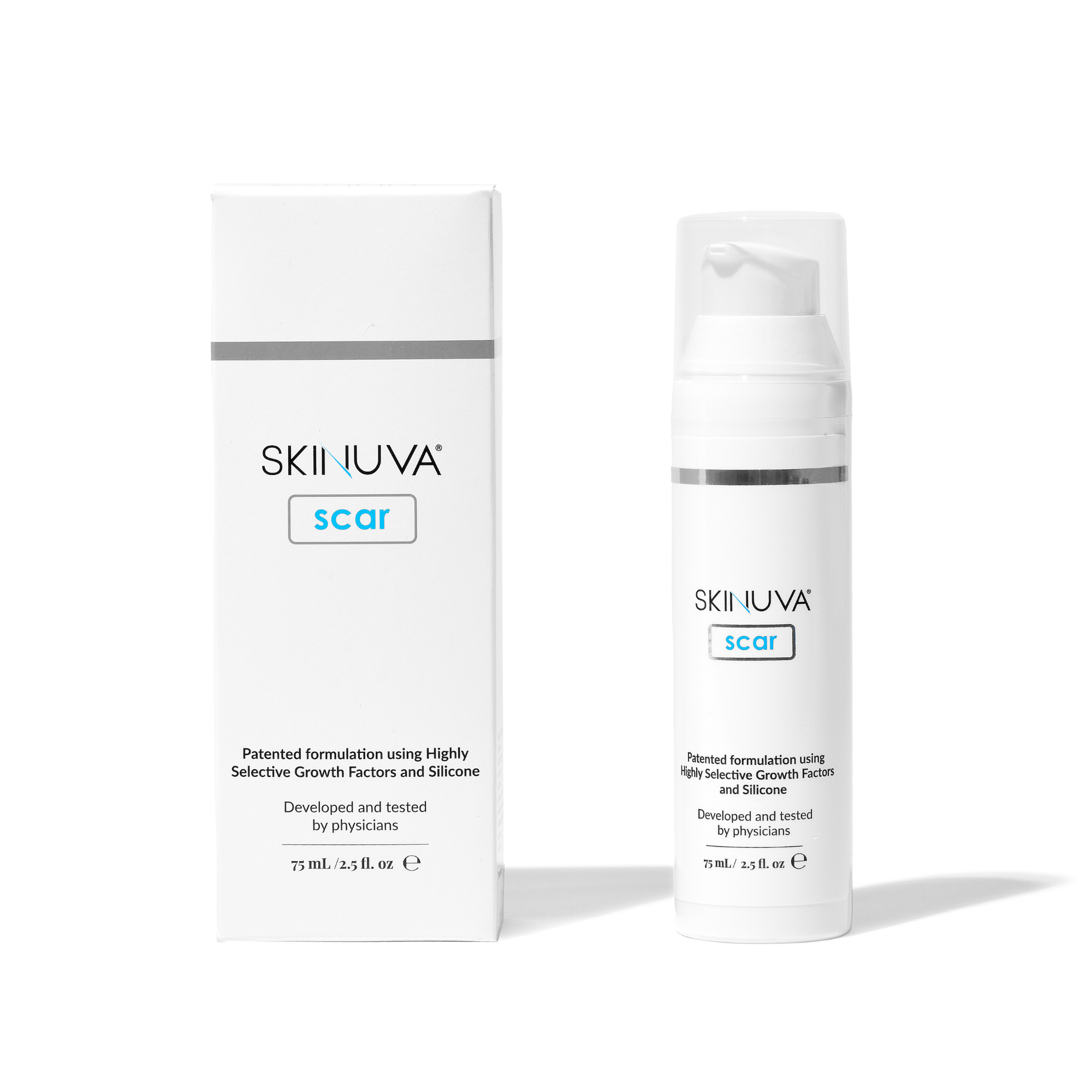
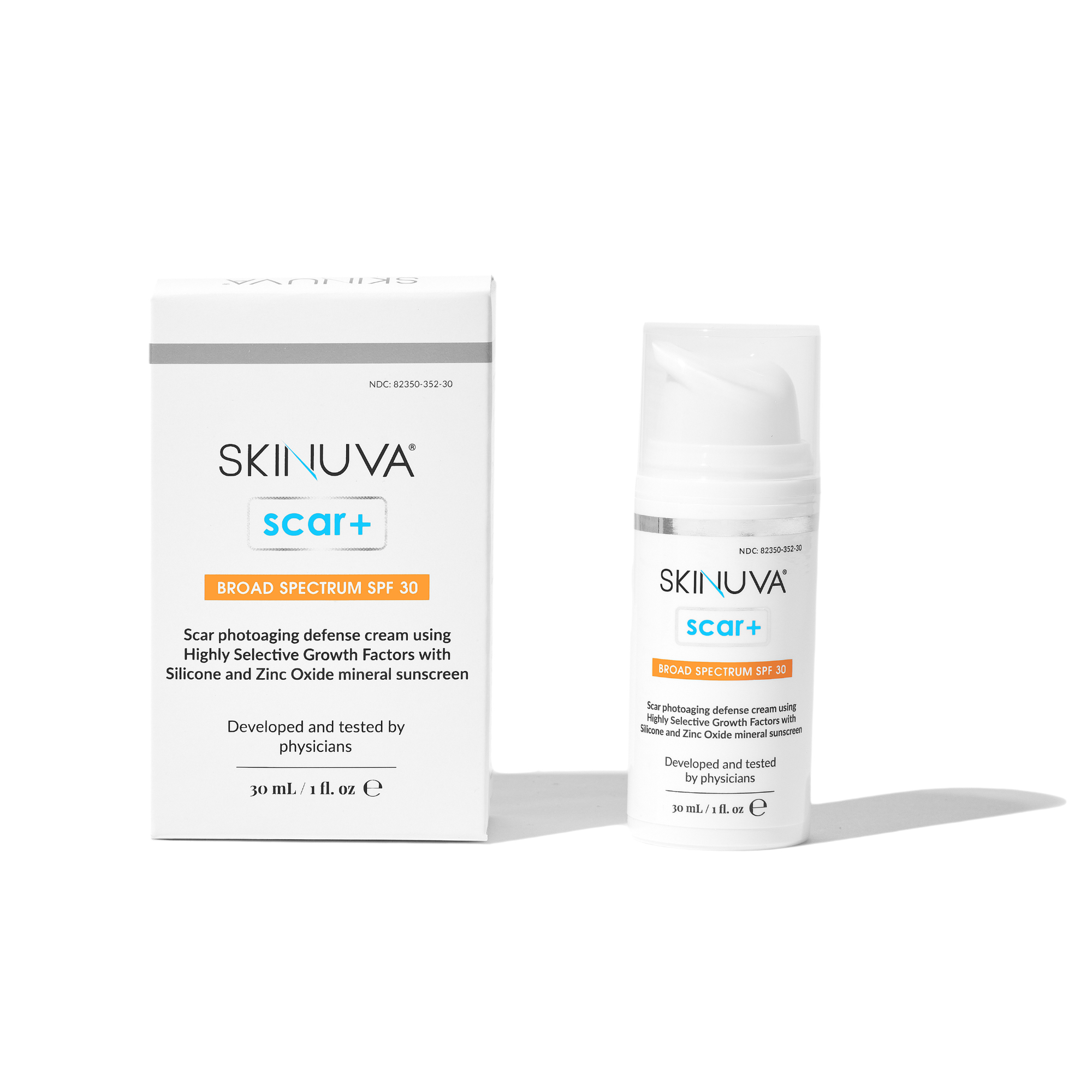
Daily sun protection helps prevent post-inflammatory hyperpigmentation and supports a more even healing process. This is particularly important for scars located on the face, chest, neck, or hands, where routine sun exposure is unavoidable. Using a scar treatment that includes built-in SPF can simplify this step by providing both UV protection and ongoing scar support in one routine. Products from Skinuva that combine synthetic growth factor technology with silicone (Skinuva Scar) and sun protection (Skinuva Scar+ SPF) are designed specifically for this stage, helping to support smoother healing while reducing the risk of long-term discoloration.
Months 2–12: Supporting Long-Term Remodeling
Many people don’t realize that scars continue to mature for months after the initial healing period. During this extended remodeling phase, collagen fibers slowly reorganize and soften. Consistent care throughout this time can help scars gradually flatten, fade, and blend more naturally with surrounding skin.
Maintaining a steady routine, including ongoing scar therapy and daily sun protection, is key. Stopping treatment too early is one of the most common reasons scars remain more visible than necessary.
Timing Matters Most
Preventing scars is not about a single product or step, but rather about supporting the skin at the right moments throughout the healing process. Protecting the wound early, beginning targeted care once the skin has closed, shielding healing tissue from sun exposure, and staying consistent over time all work together to influence the final outcome.
By taking a proactive, timeline-based approach, it’s often possible to significantly reduce the likelihood of visible scarring — helping skin heal smoother, more evenly, and with greater confidence.