Addressing Scar Discoloration Before Patients Ask: Elevating Post-Procedure Care
Scars are more than just a mark on the skin; they are a testament to healing, yet often come with challenges that go beyond texture. For many patients, the discoloration that accompanies scar formation can be the most vexing aspect of recovery. Even when a scar feels flat and smooth, its appearance can still be marred by redness or dark patches that refuse to blend in with the surrounding skin.
This pigmentation change, which can take weeks or months to manifest fully, often catches patients off guard. Proactively addressing scar discoloration can significantly enhance post-procedure care and patient satisfaction, ensuring a more holistic approach to healing.
Understanding Scar Discoloration
When the skin undergoes trauma—whether from surgery or injury—the body's natural response is inflammation, setting the stage for tissue repair. During this process, melanocytes, which produce skin pigment, may become overstimulated. This overstimulation can lead to post-inflammatory hyperpigmentation (PIH), where the scar appears darker than the surrounding area. Additionally, scars may linger in shades of red or pink due to the prolonged vascular activity that occurs during healing.
While patients with higher melanin levels, meaning those with naturally darker skin tones, are more susceptible to hyperpigmentation, discoloration is a universal concern across all skin types following various treatments and injuries. Therefore, although scar texture is an important component of healing, tone is equally critical to achieving a satisfactory cosmetic outcome.
The Role of Early Intervention
Traditional scar care often emphasizes flattening and softening, but pigmentation issues need attention from the outset. By taking a preemptive approach, practitioners can:
- Set realistic recovery expectations
- Promote a more even-looking result
- Mitigate long-term discoloration
- Enhance patient confidence in their healing process
Once the incision has fully healed, introducing products that target discoloration can refine cosmetic results and elevate care standards.
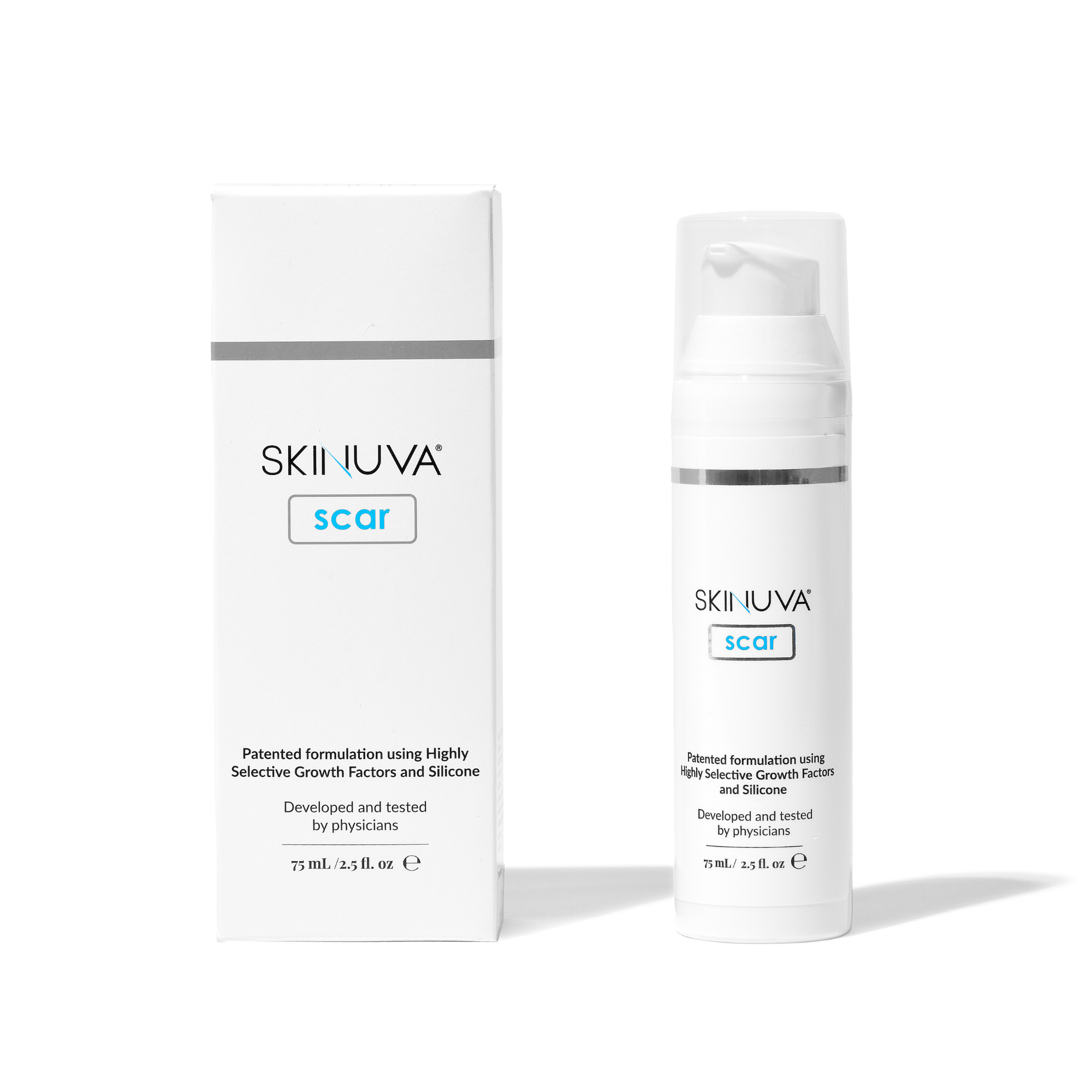
Introducing Skinuva Scar: The First Line of Defense in Early Scar Healing
In the realm of scar management, early intervention is paramount. Rather than focusing solely on tone correction, a comprehensive scar therapy should be your go-to from the moment an

incision has sealed. This is where Skinuva Scar steps in, offering a clinically supported, silicone-based formulation that expertly guides the remodeling process from the outset.
Skinuva Scar is meticulously crafted to tackle the primary concerns of fresh scars: thickness, texture, and early discoloration. During the initial healing phase, scars naturally exhibit red, pink, or purplish hues due to increased vascular activity and inflammation. Supporting the scar during this critical period is essential for enhancing both texture and visible tone.
Key Benefits of Skinuva Scar:
- Flatten and Smooth Raised Scars: Helps in minimizing the prominence of scars.
- Reduce Redness and Pink Discoloration: Alleviates early vascular discoloration.
- Support Healthy Collagen Remodeling: Encourages optimal skin structure restoration.
- Provide Silicone-Based Occlusion: Creates an ideal healing environment.
- Maintain Hydration: Enhances scar pliability and resilience.
By addressing both the structural integrity and early vascular discoloration, Skinuva Scar acts as the initial step in a comprehensive scar protocol, setting a balanced foundation before considering advanced tone correction.
When to Introduce Skinuva Brite: Addressing Residual Hyperpigmentation
Upon completing Skinuva Scar, some patients might still experience residual hyperpigmentation, particularly those prone to post-inflammatory hyperpigmentation. Unlike the initial red or pink hues of new scars, this lingering pigmentation often presents as tan, brown, or darker than the surrounding skin.
At this juncture, Skinuva Brite becomes an ideal follow-up solution.
Key Benefits of Skinuva Brite:
- Target Residual Hyperpigmentation: Addresses lingering discoloration.
- Promote Even Skin Tone: Enhances overall skin uniformity.
- Brighten Post-Scar Discoloration: Improves skin clarity after initial scar remodeling.
- Support Skin Clarity and Hydration: Fortifies the skin’s natural vibrancy.
- Formulated with potent ingredients such as niacinamide, tranexamic acid, and vitamin C, Skinuva Brite specifically targets pigment irregularities that persist after the scar has matured.
Elevating Post-Procedure Care Through a Stepwise Approach
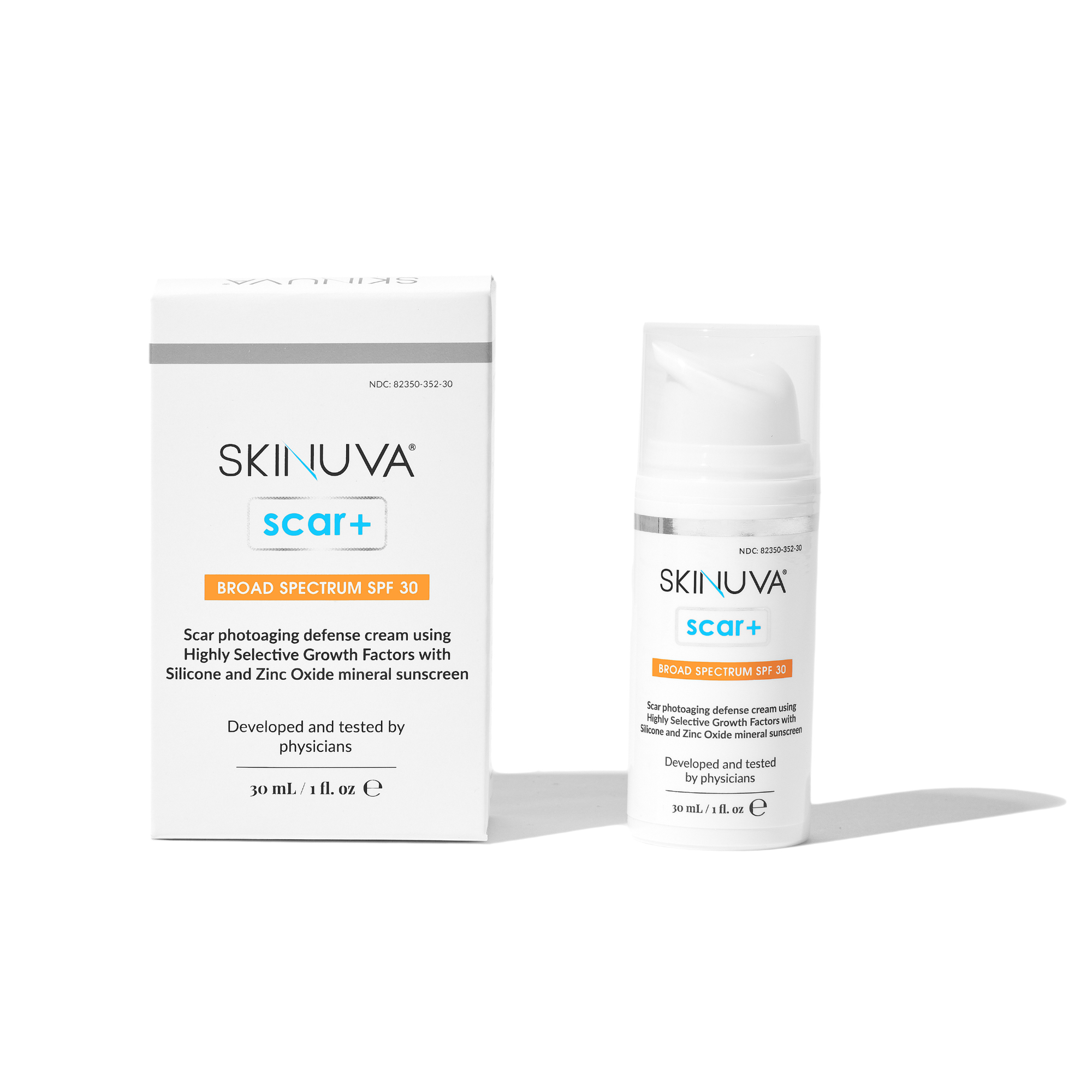
Patients often evaluate recovery visually. A scar may be flat yet discolored, or smooth but uneven in tone, and still impact overall satisfaction. By guiding patients through a structured scar protocol that begins with Skinuva Scar and later transitions to Skinuva Brite, practices demonstrate a comprehensive and medically guided approach to healing.
Integrating both products into post-procedure care recommendations ensures patients receive targeted support at each stage of scar maturation. This phased strategy not only optimizes cosmetic outcomes but also underscores a practice’s commitment to proactive, full-spectrum scar management.