October is Breast Cancer Awareness Month, a time to raise awareness, support those affected by breast cancer, and recognize the many stages of treatment and recovery.
For those undergoing breast cancer treatment, healing can extend far beyond the procedure itself. Surgery, reconstruction, radiation, and other treatments can affect the skin in different ways. While surgical scars may be one of the most visible reminders of treatment, supporting the skin throughout recovery is an important part of the healing journey.
How Skin Can Change During Recovery
Every breast cancer journey is different, and so is every patient's skin.
Procedures such as lumpectomy, mastectomy, lymph node surgery, and breast reconstruction can leave incisions that require time to heal. During recovery, patients may also experience swelling, tightness, tenderness, numbness, or changes in sensation around the surgical area.
Other treatments can affect the skin as well. Radiation therapy, for example, may cause temporary redness, dryness, itching, peeling, swelling, or changes in skin tone.
Because treatment plans vary, patients should always follow the skincare and wound-care instructions provided by their healthcare team.
Gentle Care During Early Healing
Immediately following surgery, the priority is allowing the incision and surrounding tissue to heal properly.
Following your surgeon's instructions for wound care, bathing, dressings, and activity is essential. The surrounding skin may also be more sensitive than usual, so gentle cleansing, avoiding unnecessary friction, and wearing comfortable clothing can help minimize irritation.
New products should not be applied directly to an incision until it has completely closed and your physician has cleared the area for topical treatment.
Recovery Doesn't End When the Incision Closes
Even after an incision closes, the skin continues to heal.
As the body repairs the area, it produces collagen that gradually reorganizes over time. New scars may initially appear red, pink, raised, firm, or darker than the surrounding skin before gradually softening and fading as they mature.
This process can continue for many months, which is why consistent scar care can become an important part of long-term recovery.
Protecting scars from UV exposure is also important, as sunlight can contribute to discoloration and make a healing scar appear more noticeable.
Supporting Breast Surgery Scars with Skinuva
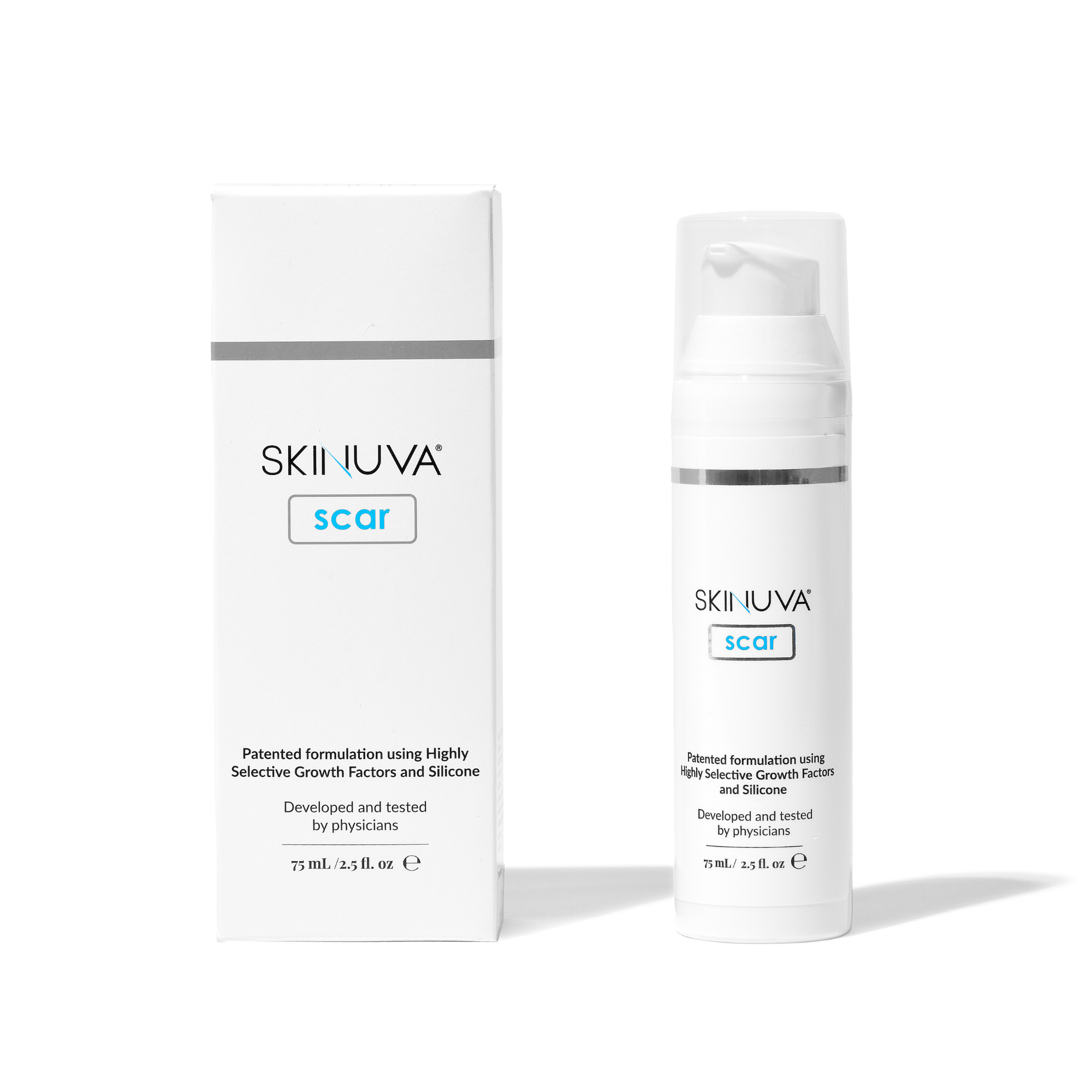
Once the incision has completely closed and a physician has cleared the area for topical scar treatment, Skinuva Scar can be incorporated into a consistent scar care routine.
Developed by physicians, Skinuva Scar combines silicone with selective synthetic growth factors and other ingredients to help improve the appearance of surgical scars, including concerns such as redness, discoloration, texture, and raised scar tissue.
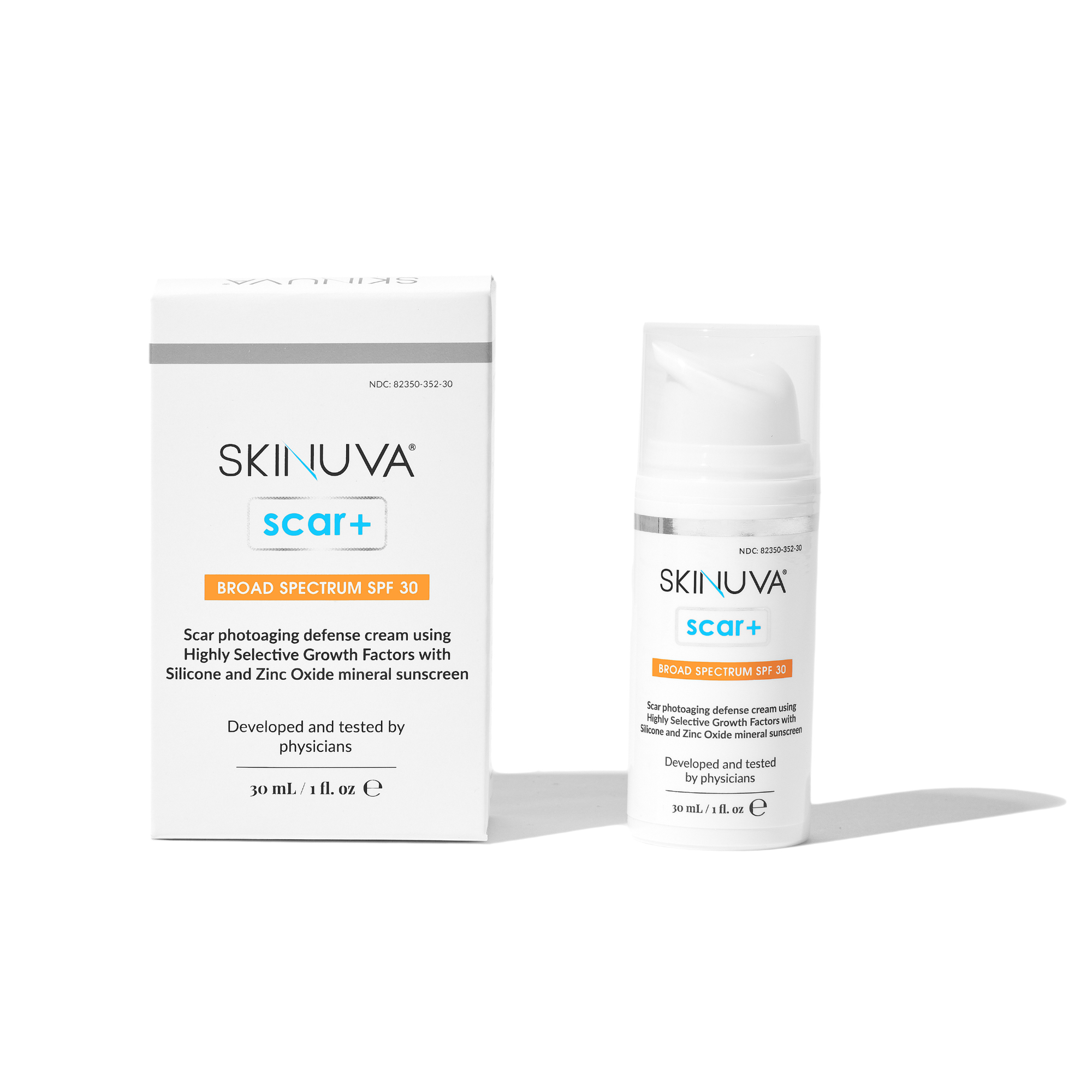
For scars that may be exposed to sunlight, Skinuva Scar+ SPF combines advanced scar care with broad-spectrum mineral sun protection, helping support the appearance of the scar while protecting it from UV exposure.
Skinuva Scar and Skinuva Scar+ SPF are generally introduced after the incision has completely closed, typically around two to three weeks after a procedure. Patients recovering from breast cancer surgery should always follow their surgeon's individual recommendations.
Supporting Skin Through Every Stage
Breast cancer recovery is about much more than the moment surgery ends. The body continues healing, rebuilding, and adapting through every stage that follows.
From gently caring for sensitive skin to protecting healing areas and eventually beginning a consistent scar care routine, the needs of your skin can change throughout recovery.
This Breast Cancer Awareness Month, we're recognizing not only the importance of awareness, but also the strength and patience involved in healing. Supporting your skin along the way can be one small but meaningful part of moving forward.